
Persistent pain can be frustrating because the place that hurts does not always explain what is happening underneath. A physical examination gives a clinician important information about movement, strength, tenderness and the pattern of symptoms. In many cases that is enough to guide the next step. At other times, the history and examination leave a question that cannot be answered by touch and movement alone.
The first reason for considering further investigation is usually not the length of the pain by itself, but the clinical question that remains. A doctor may want to understand whether a bone, joint, tendon, muscle or another structure could be contributing to symptoms. Different tests show different types of tissue, so the choice of scan depends on what the clinician is trying to find out. Medical imaging services can support that process by providing images that are interpreted alongside the examination and the person’s medical history.
A scan is not automatically better than a physical examination. Imaging can show changes that are not responsible for a person’s pain, and a normal-looking image does not make symptoms unimportant. This is why a useful referral starts with a clear reason for the test. The referring clinician can consider where the pain is felt, what movements affect it, whether there was an injury and how symptoms have changed over time before deciding whether imaging may add useful information.
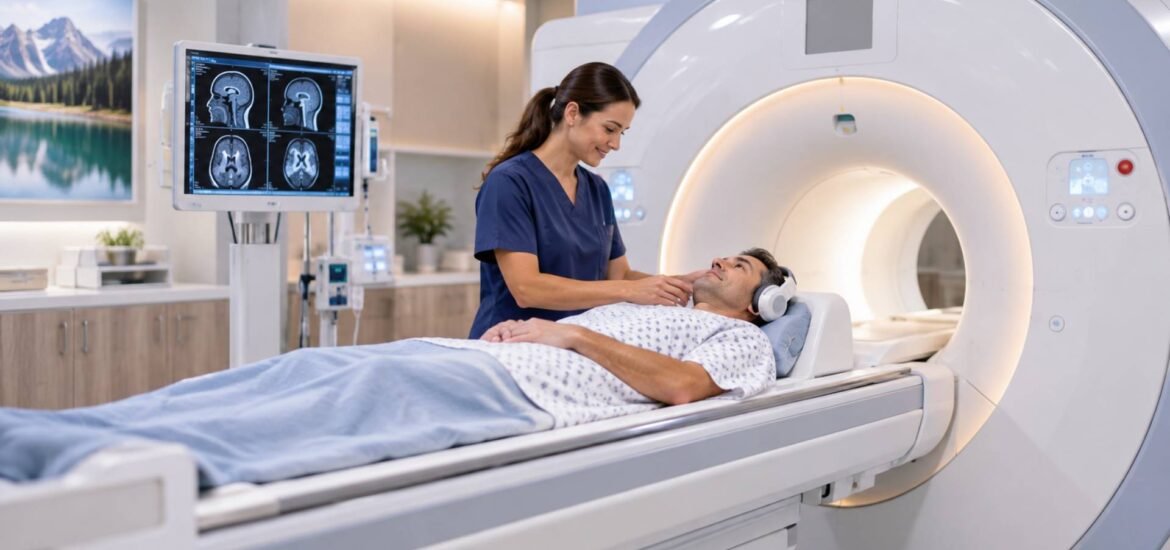
The type of imaging also matters. X-rays are commonly used to look at bones and some joint changes. Ultrasound can create real-time images of certain soft tissues and does not use ionising radiation. MRI can produce detailed images of many soft tissues, joints and other internal structures with magnets and radio waves, without x-ray radiation. CT uses x-rays to create detailed cross-sectional images. No single test is the best choice for every kind of persistent pain.
Timing should be individual as well. Some painful conditions improve with time and appropriate conservative care, while other situations may justify earlier investigation. A clinician may also change the plan if symptoms develop in a new way, function becomes more limited or the findings on examination do not match the expected course. Imaging is most useful when the result could reasonably help answer a question or influence what happens next, rather than being ordered simply because pain has continued.
Patients can make an appointment more useful by giving a clear history. It helps to describe when the pain began, where it is strongest, what makes it better or worse and whether there are related symptoms such as swelling, weakness or reduced movement. For medical imaging services, previous injuries, operations and earlier scans may also matter. Bringing this information to the referring practitioner can reduce duplication and help them choose an appropriate investigation.
A useful conversation can also cover the limits of a proposed test. Patients using medical imaging services may ask what the clinician hopes to learn, whether the result is likely to change management and whether another form of assessment could answer the same question. This does not mean challenging every referral. It helps the patient understand why a particular investigation has been chosen and what role the result is expected to play.
The report is another part of the process, not a diagnosis in isolation. A radiologist interprets the images and sends findings to the referring clinician, who can relate them to symptoms and examination results. Sometimes a scan identifies a likely explanation. Sometimes it narrows the possibilities or shows that a suspected problem is not visible. Further assessment may still be needed if symptoms and imaging do not line up.
People with persistent pain should seek medical advice about the right next step for their own situation, especially if symptoms are changing or causing concern. When imaging is used for a defined clinical reason, they can add information that a physical examination cannot provide on its own. The value comes from combining the scan with clinical judgement, not from treating an image as the whole answer.